Cleanup after fire and spill incidents is often more complex than it appears. Hydrocarbon stabilization after fire and spill incidents depends heavily on field conditions, surface types, and response methods.
While it’s widely understood that hydrocarbons can remain after suppression, what is less predictable is how those materials behave once the immediate hazard is controlled. Field conditions can vary significantly, and those differences often determine the complexity of cleanup.
A Common Field Scenario
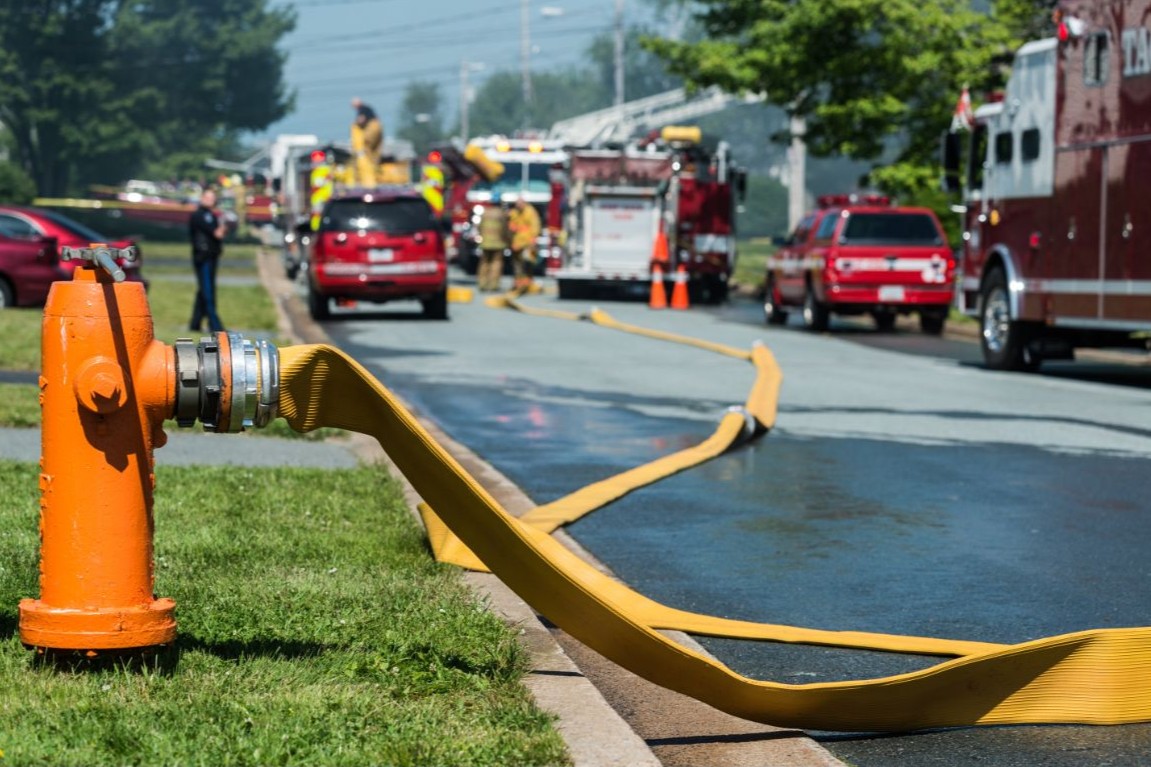
Consider a vehicle fire on a roadway involving gasoline or diesel.
The fire is extinguished, and the surface is rinsed. Visually, the scene may appear clean. However, hydrocarbons may have already:
- Spread across the pavement during suppression
- Penetrated into asphalt or aggregate
- Moved toward drainage pathways
- Mixed with water and formed emulsified residues
Two similar incidents can look nearly identical once the fire is out, but require very different levels of cleanup depending on how those conditions developed.
Hydrocarbon Stabilization in the Field
After suppression or containment, hydrocarbons rarely remain in a single, uniform state.
They can spread across surfaces, penetrate porous materials such as asphalt and soil, migrate through drainage pathways, or form emulsified mixtures when combined with water and agitation.
Because much of this activity is not visible, the full extent of contamination is often underestimated.
Why Stabilization Outcomes Vary
Even when fuels and incident types are similar, cleanup outcomes can differ significantly.
That variability is influenced by:
- Surface composition (concrete, asphalt, soil, aggregate)
- Suppression method and water volume applied
- Environmental conditions such as temperature and moisture
- Fuel characteristics such as volatility and viscosity
Each of these factors affects how hydrocarbons move, persist, and respond to treatment. These variables directly affect hydrocarbon stabilization after fire and spill incidents, making outcomes difficult to predict.
Stabilization Begins During Response
Stabilization is often viewed as a post-incident activity, but field conditions are largely shaped during suppression.
How hydrocarbons are managed at the time of response can influence:
- How far contamination spreads
- How much material penetrates below the surface
- How complex follow-on remediation becomes
Small differences in how an incident is managed—such as application method, dilution, or agitation—can significantly influence how hydrocarbons respond to treatment. Early decisions can reduce variability—or increase it.
Applying These Principles in the Field
As response expectations evolve, there is increasing focus on approaches that address both immediate hazards and the conditions that influence downstream remediation.
Micro-Blaze® Microbial Products are designed to support this integrated approach by introducing biological activity at the point of response.
In fire suppression applications, this allows hydrocarbon interaction to begin during knockdown. In post-incident cleanup, microbial processes can support continued breakdown of residual hydrocarbons across surfaces and porous materials.
This approach does not replace standard response protocols or regulatory requirements, but it supports a more integrated strategy—where suppression and stabilization are considered together.
A More Informed Approach to Cleanup
Hydrocarbon stabilization is not a single step. It is a process shaped by conditions at the scene and decisions made during response.
Understanding how hydrocarbons behave in real-world conditions allows response teams to better anticipate challenges, reduce uncertainty, and improve the effectiveness of cleanup efforts.
Additional context on microbial fire suppression and post-incident environmental considerations can be found in our overview of suppression after knockdown.